


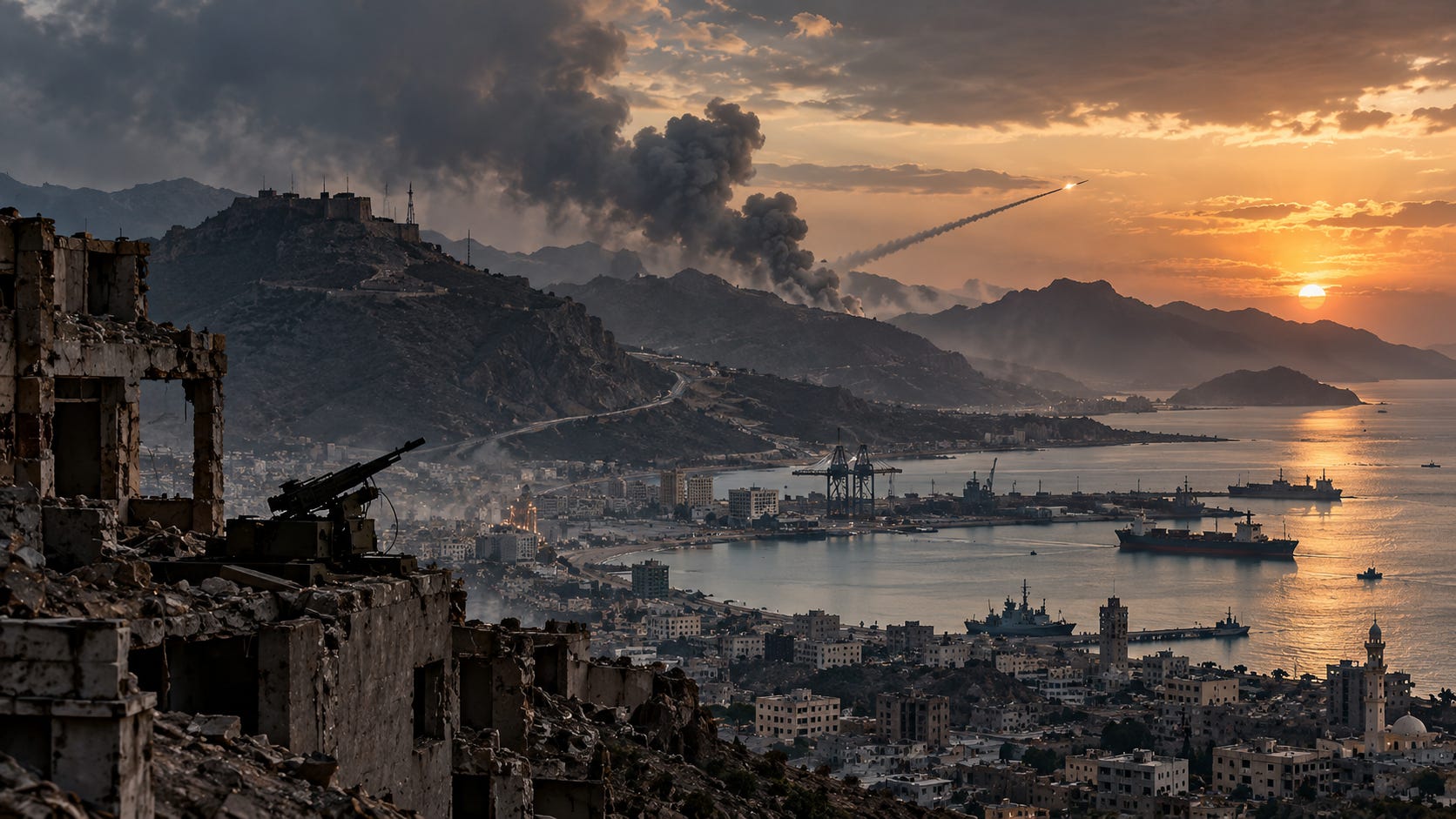
Badr Moon Rising: The Alliance Beyond Mecca
The signing of the Badr Memorandum of Understanding in Doha on October 21, 2026, has complicated Saudi Arabia’s ambitions to establish a new regional security framework through the Mecca Accord. Türkiye and Pakistan, which joined Saudi Arabia in signing the Mecca Joint Defence Agreement on August 7, have now established a separate quadrilateral with Qatar and Indonesia. The announcement came one day after Ankara submitted the Mecca agreement to parliament for ratification, raising questions about why two founding members would establish another institution before their original agreement had fully entered into force. Qatar and Indonesia could have sought admission to Mecca under provisions allowing additional members to join with the consent of the three signatories. Instead, they became founding participants in a separate arrangement that excludes Saudi Arabia and incorporates governments with substantially different political ambitions. The decision gives Ankara and Islamabad additional negotiating opportunities while allowing Doha to strengthen its established partnership with Türkiye and extend its influence into Asian defense-industrial networks.
The Badr memorandum covers joint military production, defense technology, research, and technical training. The Mecca agreement contains collective-defense obligations, intelligence cooperation, logistical assistance, and provisions for military-industrial development. The overlap in defense production is especially important because Mecca already provides an institutional basis for cooperation in that field. Türkiye and Pakistan therefore had an existing mechanism through which they could pursue industrial partnerships with additional governments, subject to the admission requirements and institutional arrangements established by the founding members. Their decision to create Badr allows Qatar and Indonesia to negotiate cooperation without accepting Saudi Arabia’s collective-defense priorities or requiring Riyadh’s approval. Whether the signatories deliberately intended to reduce Saudi influence remains unconfirmed, but the institutional arrangements give them the means to do so.
Mecca’s Unfinished Business
The Mecca Accord emerged from Saudi Arabia’s increasingly difficult security environment, particularly the expansion of Houthi attacks against the kingdom’s infrastructure and the growing costs of regional military confrontation. Riyadh has sought additional defense partners as Iranian-supported organizations have demonstrated their ability to threaten energy installations, airports, and commercial activity. Türkiye offers substantial capabilities in unmanned aircraft and electronic warfare, while Pakistan maintains longstanding military relationships with the kingdom and possesses nuclear weapons. Their participation gives Saudi Arabia access to additional expertise at a time when the reliability and political conditions attached to external military assistance have become increasingly contentious.
The agreement’s provisions nevertheless leave considerable discretion to its members. Article 2 requires assistance following an armed attack, while allowing each government to determine the scope and nature of its contribution after assessing the circumstances. Türkiye and Pakistan can consequently fulfill their obligations through defensive equipment, technical personnel, intelligence cooperation, or other assistance without automatically committing combat forces to Saudi military operations. Ankara’s parliamentary approval procedures impose further requirements on overseas troop deployments, while Pakistan’s political institutions have previously resisted participation in Saudi military campaigns.
Pakistan’s refusal to join the 2015 intervention in Yemen provides an important precedent. Despite its financial dependence on Saudi Arabia and longstanding defense relationship with Riyadh, Islamabad declined to enter a conflict that could have aggravated relations with Iran and generated domestic opposition. Pakistan continues to face security threats along its western border, and its relationship with Tehran remains vulnerable to disputes involving armed organizations operating across the frontier. These considerations have become more pressing as the regional confrontation with Iran has expanded.
Türkiye faces comparable complications arising from its economic relationships with Iran and its competing ambitions across the Middle East. Ankara has condemned attacks against Saudi Arabia and expressed support for strengthening defensive capabilities, but its wider interests require continued diplomatic engagement with Tehran. The Mecca agreement consequently creates obligations that Türkiye will have to reconcile with its relationships elsewhere, particularly if Saudi Arabia demands more extensive assistance against Iranian-supported forces.
The decision to establish Badr before Mecca’s implementation had been fully tested gives Ankara and Islamabad additional institutional options. Both governments can negotiate industrial projects with Qatar and Indonesia without requiring Saudi participation in decisions concerning technology transfer, production facilities, or future defense exports. Riyadh retains influence through its bilateral relationships with both governments, but its authority under Mecca does not extend automatically to projects established through the separate quadrilateral.
Qatar’s Islamist Agenda Finds Another Opening
Qatar’s participation in Badr raises particularly serious political concerns because Doha has repeatedly supported Islamist movements and cultivated relationships with organizations whose activities have undermined regional stability. Its involvement with the Muslim Brotherhood during the Arab Spring, financial assistance to Islamist political actors, and longstanding relationship with Hamas have generated sustained confrontation with Egypt and several Gulf governments. Qatar has also used its extensive media resources and diplomatic connections to promote political movements that challenged neighboring governments, particularly during periods of revolutionary upheaval. Its entry into a new defense-industrial arrangement with Türkiye gives Doha another opportunity to institutionalize relationships with governments whose military capabilities and international influence exceed its own.
During the Arab Spring, Qatar invested heavily in Mohamed Morsi’s Muslim Brotherhood government in Egypt, providing financial assistance and political support while other Gulf governments became increasingly alarmed by the Brotherhood’s regional ambitions. Following Morsi’s removal in 2013, Doha continued to accommodate Brotherhood figures and maintain relationships with political networks opposed to the Egyptian government. Al Jazeera’s coverage of Egypt became another source of confrontation, with Cairo accusing the Qatari-funded network of promoting the Brotherhood and undermining Egyptian political institutions.
Qatar’s involvement in Libya generated additional disputes. Doha supported armed opposition groups during the uprising against Muammar Gaddafi and maintained relationships with Islamist actors during the subsequent struggle for power. Rival governments and armed organizations competed for control of Libyan institutions while external sponsors provided financing and political assistance to preferred partners. Qatar’s involvement became a recurring source of disagreement with Egypt and the UAE, whose governments supported competing political forces and accused Doha of empowering Islamist organizations.
In Syria, Qatar financed and supported elements of the armed opposition, including Islamist organizations whose activities contributed to disputes over the political direction of the rebellion. Its relationships with opposition figures gave Doha influence over negotiations and external assistance, while disagreements among regional sponsors complicated efforts to coordinate military and political support. Türkiye pursued overlapping relationships with Islamist opposition movements, creating opportunities for cooperation between Ankara and Doha that extended beyond their bilateral security partnership.
Their political alignment became especially visible after the Egyptian military removed Morsi. Erdoğan condemned the intervention and continued to criticize President Abdel Fattah el-Sisi’s government, while Qatar maintained relationships with Brotherhood figures who had lost power. Ankara and Doha subsequently expanded their defense cooperation, including arrangements for a Turkish military presence in Qatar. The base provided Doha with additional protection during the 2017 diplomatic crisis, when Saudi Arabia, Bahrain, Egypt, and the UAE severed relations with Qatar over allegations concerning its support for extremist organizations and interference in neighboring countries.
The demands presented to Doha included restrictions on its relationships with Islamist organizations and the closure of the Turkish military base. Qatar rejected the demands, while Ankara reinforced its military presence and provided political support. The Al-Ula agreement restored diplomatic relations in 2021, but Doha retained its military partnership with Türkiye and continued to cultivate relationships with Islamist political actors.
Qatar’s relationship with Hamas presents another concern. Doha has hosted senior Hamas political leaders and provided substantial financial assistance to Gaza, including transfers that previously received Israeli approval. Its role in negotiations involving Hamas has given Qatari officials access to Washington and other international governments, while the organization’s October 7 terrorist attacks exposed the consequences of its continued military capabilities. The distinction between humanitarian assistance to Gaza and political relationships with Hamas remains important when evaluating individual transactions, but Doha’s willingness to host the organization’s leadership has given it an unusual position in negotiations involving a terrorist organization.
Qatar also hosted the Taliban’s political office and facilitated negotiations leading to the 2020 Doha agreement with the US. Its involvement provided opportunities to communicate with Taliban representatives while Afghanistan’s internationally recognized government struggled to preserve its authority. The subsequent Taliban takeover in 2021 raised additional questions about the political consequences of negotiations conducted through Doha and the extent to which the arrangements had strengthened the Taliban’s international position.
Badr offers Qatar opportunities to expand its defense relationships while avoiding Saudi oversight. The quadrilateral could facilitate Qatari investment in military production and provide access to technology developed through Turkish, Pakistani, and Indonesian partnerships. Specific financing commitments and technology-transfer arrangements have yet to be publicly established, leaving important questions about how Doha will exercise influence over future projects.
Indonesia’s participation creates another opportunity for Qatar to develop relationships in Southeast Asia, where Islamist political movements operate within a substantially different political environment. Pakistan brings its own history of Islamist political activism and extensive military institutions. Qatar’s previous use of financial patronage to cultivate political relationships warrants examination of whether its participation in Badr will extend beyond defense production into political organizations or affiliated institutions. Any such development would require evidence of actual financing and organizational connections, particularly because the memorandum itself establishes no publicly documented mechanism for supporting Islamist networks.
Türkiye’s Second Center of Power
Türkiye’s decision to participate in Badr reflects Erdoğan’s ambition to expand Turkish influence through defense manufacturing and international military partnerships. Ankara has invested heavily in developing unmanned aircraft, naval platforms, and electronic warfare capabilities, while Turkish manufacturers have sought foreign customers willing to participate in joint production. These arrangements can generate long-term commercial relationships through maintenance requirements, specialist training, and the manufacture of replacement components.
Saudi Arabia represents a valuable market, particularly because Riyadh has sought to develop its domestic defense industry and reduce reliance on imported military equipment. Turkish manufacturers have opportunities to benefit from Saudi procurement, although the kingdom’s industrial requirements include local production and technology transfer. Negotiations over manufacturing rights and intellectual property can become contentious when governments seek to acquire expertise while foreign companies attempt to preserve control over commercially valuable technologies.
Badr provides Ankara with additional potential investors and manufacturing partners. Qatar possesses substantial financial resources and an established security relationship with Türkiye, while Pakistan has experience producing military equipment through cooperation with Turkish manufacturers. The Pakistan Navy’s MILGEM corvette program already provides an example of industrial cooperation involving ship construction in both countries. Indonesia offers further opportunities through its domestic defense industry and longstanding efforts to acquire foreign technology.
The new framework could allow Turkish manufacturers to negotiate production arrangements involving several participating countries. Ankara would have opportunities to distribute manufacturing responsibilities according to industrial capabilities and market demand, while retaining a substantial role in design and systems integration. The agreement’s implementation will depend on financing, export permissions, and negotiations over intellectual property, particularly where individual systems incorporate components originating in third countries.
Türkiye’s relationship with Qatar also creates political incentives for maintaining a separate institution. Ankara supported Doha during the Gulf blockade and has continued to cultivate the relationship despite reconciliation with Saudi Arabia. Their historical cooperation involving Brotherhood-aligned political movements has repeatedly brought them into conflict with Egypt and other regional governments. The Badr framework gives their partnership additional institutional reach through the inclusion of Pakistan and Indonesia.
Erdoğan can also use the overlapping arrangements to preserve influence in competing regional relationships. Türkiye can pursue Saudi defense contracts while expanding industrial cooperation with Qatar, whose political interests have often diverged from Riyadh’s. Ankara’s participation in both agreements gives it opportunities to negotiate with each government separately, particularly when disagreements arise over military assistance or the distribution of industrial investment.
The relationship with Iran imposes further considerations. Türkiye has competed with Tehran in Syria and elsewhere, but economic ties and diplomatic contacts have continued despite recurring disagreements. Ankara’s participation in Mecca creates expectations of assistance against threats to Saudi Arabia, while Badr provides an industrial partnership whose membership does not require a common position toward Iranian activities.
Indonesia’s Distance from Saudi Security Commitments
Indonesia’s participation reflects its ambitions to expand domestic defense manufacturing and acquire military technology through international partnerships. Jakarta has pursued modernization programs involving naval vessels and armored platforms while seeking arrangements that support local production. Türkiye has become an attractive partner because Turkish manufacturers have demonstrated willingness to negotiate joint development and technology-transfer projects.
The two countries have already cooperated on armored vehicle development, providing a foundation for additional industrial projects. Badr could facilitate further negotiations involving research facilities and manufacturing capacity, while Pakistan’s participation introduces another potential partner with experience in military production. Qatar could provide financing for projects whose commercial viability depends on investment and sufficiently large procurement commitments.
Indonesia’s security priorities have remained concentrated on the Indo-Pacific. Its armed forces face extensive maritime responsibilities, including protection of territorial waters and responses to illegal activity across a geographically dispersed archipelago. Jakarta also has to consider growing military competition in surrounding waters and the requirements of maintaining credible capabilities near strategically important sea routes.
Joining Mecca would introduce obligations involving conflicts far removed from these priorities. The agreement’s collective-defense provisions could require Indonesia to provide assistance following attacks against Saudi Arabia, Türkiye, or Pakistan. Although members retain discretion over the nature of their contributions, Jakarta would have to explain the political and financial costs of such commitments to domestic institutions and the public.
Indonesia’s longstanding independent and active foreign-policy tradition reinforces its preference for arrangements that preserve discretion over military involvement. The government has cultivated relationships with competing international powers while generally avoiding formal commitments that would require participation in distant conflicts. Badr allows Jakarta to pursue defense-industrial cooperation without accepting Mecca’s collective-defense provisions.
The distinction has become more consequential during the confrontation involving Iran and Saudi Arabia. Indonesia has economic interests in Gulf energy supplies and commercial relationships across the Middle East, but its military resources remain primarily committed to national and regional security requirements. A commitment to assist Saudi Arabia during Houthi attacks could generate demands for equipment and personnel at a time when Indonesia continues to face substantial domestic modernization costs.
Qatar’s participation introduces political considerations that Jakarta will have to manage. Indonesia contains influential Islamic organizations with differing approaches to political Islam, and foreign relationships involving Islamist movements have periodically generated domestic controversy. Doha’s history of financing Islamist political actors elsewhere warrants scrutiny if Qatari organizations begin developing political relationships alongside the quadrilateral’s industrial activities. The publicly announced memorandum, however, provides no evidence of such arrangements.
Pakistan’s Two-Way Bargain
Pakistan’s participation in both agreements reflects its efforts to expand military partnerships while preserving access to financial assistance from Gulf governments. Islamabad has longstanding defense relations with Saudi Arabia, including training arrangements and cooperation involving Pakistani military personnel. Riyadh has also provided financial support during periods of economic difficulty, giving Saudi policymakers considerable influence over Pakistan’s external relationships.
The 2015 Yemen intervention exposed the limits of that influence. Pakistan’s parliament declined to authorize participation in the Saudi-led military campaign, citing concerns about regional involvement and the consequences of confrontation with Iran. Islamabad maintained its defense relationship with Riyadh while avoiding direct participation in the war.
The Mecca Accord creates additional expectations because its collective-defense provisions establish a formal obligation to provide assistance following an armed attack. Pakistan will nevertheless have to determine the extent of its contribution according to military resources and domestic security requirements. Its relationship with Iran remains sensitive, particularly because armed organizations operating along the frontier have contributed to recurring tensions.
Badr gives Pakistan additional opportunities to develop military production and pursue export markets. Türkiye has already become an important industrial partner through naval manufacturing, while Qatar offers potential investment opportunities. Indonesia provides access to another substantial market and could become a partner in projects involving locally manufactured components or maintenance facilities.
Islamabad’s simultaneous participation in both agreements could strengthen its bargaining position with Riyadh. Pakistan can continue to receive Saudi financial assistance and pursue defense cooperation under Mecca while developing projects through Badr. If Saudi Arabia seeks greater influence over Pakistani military production or export decisions, Islamabad will have alternative institutional relationships through which to negotiate industrial opportunities.
These arrangements also expose Pakistan to competing political expectations. Saudi Arabia has sought to limit the influence of Islamist movements associated with the Muslim Brotherhood, while Qatar and Türkiye have historically supported several such organizations. Islamabad will have to manage relationships with governments whose policies toward Islamist political activism and Iran differ substantially.
Pakistan’s domestic economic difficulties could further influence its decisions. Defense-industrial projects require financing and sustained procurement commitments, and Islamabad may struggle to fund ambitious joint production without external investment. Qatar’s participation could provide opportunities to obtain capital, although no publicly confirmed arrangement establishes the scale or conditions of future financing.
Saudi Arabia’s Missing Seat
Saudi Arabia’s absence from Badr becomes especially conspicuous because the Mecca Accord already contains provisions for defense-industrial cooperation and the admission of additional members. Türkiye and Pakistan could have pursued expanded manufacturing partnerships within the Saudi-backed framework, but the creation of a separate quadrilateral allows them to negotiate with Qatar and Indonesia through an institution in which Riyadh has no founding-member authority.
For Saudi policymakers, the arrangement creates uncertainty about the future direction of regional defense cooperation. Riyadh has sought to strengthen military partnerships during a period of escalating Houthi attacks and growing disagreements with the UAE. Its ability to attract additional participants to Mecca will depend partly on whether prospective members consider Saudi security priorities compatible with their own interests.
Qatar’s participation in Badr introduces a particularly contentious element. Doha’s relationships with Islamist political movements and its historical disputes with Saudi Arabia have generated repeated confrontations over regional security. Its inclusion in a separate institution involving two Mecca signatories allows Qatar to expand military-industrial relationships without negotiating the political conditions that Riyadh could impose through Mecca’s admission procedures.
Bahrain and Egypt have additional reasons to examine the arrangement closely. Both governments participated in the 2017 measures against Qatar, and both have accused Doha of supporting Islamist organizations that threatened their domestic security. The quadrilateral could expand Qatar’s influence over defense-industrial networks involving Türkiye and Pakistan, whose military relationships extend across the Middle East and Asia.
The UAE faces a different set of concerns. Abu Dhabi has invested in its own defense industry and cultivated relationships with international manufacturers, while its rivalry with Saudi Arabia has complicated regional security cooperation. Its historical disagreements with Qatar and Türkiye could influence Emirati responses if Badr develops substantial manufacturing capabilities or begins attracting additional participants.
The institutional overlap also raises questions about the future allocation of defense-industrial investment. Saudi Arabia has sought to establish domestic manufacturing capacity through procurement agreements and technology-transfer arrangements. Turkish companies participating in Badr may encounter competing demands from Saudi and Qatari investors, particularly where projects require exclusive production rights or involve technologies whose export is subject to political approval.
Mecca’s collective-defense provisions create further complications. Saudi Arabia has immediate security requirements arising from Houthi attacks, while Türkiye and Pakistan retain relationships with governments whose interests do not necessarily align with Riyadh’s. If the kingdom demands more extensive assistance, Ankara and Islamabad will have to consider how their obligations affect other partnerships, including their participation in Badr.
The Turkish parliamentary ratification process will provide an early indication of how Ankara intends to manage these commitments. Parliamentary approval of Mecca would establish the domestic legal basis for the agreement, although overseas military deployments would remain subject to additional requirements. Saudi Arabia will then have to negotiate the specific assistance it expects from Türkiye and Pakistan, particularly if Houthi attacks continue to damage infrastructure.
Badr’s implementation will create a separate set of negotiations involving financing and industrial production. Qatar will have opportunities to propose investment arrangements, Türkiye will seek to protect its manufacturing interests, and Pakistan and Indonesia will pursue technology-transfer provisions. Saudi Arabia will have no formal role in those discussions unless the signatories subsequently establish mechanisms for cooperation with Mecca.
The choice of future projects will reveal which government acquires the greatest influence over the quadrilateral’s development. Turkish manufacturers may seek arrangements that preserve control over advanced technology, while Indonesia and Pakistan could demand substantial local production. Qatar’s financial participation could give Doha influence over investment decisions, particularly if the projects require capital beyond the resources available to participating manufacturers.
For Saudi Arabia, the immediate challenge will remain securing effective assistance against attacks on its territory. Türkiye and Pakistan have accepted collective-defense commitments through Mecca, and Riyadh will expect those commitments to produce operational results. At the same time, both governments have acquired another forum for negotiating military-industrial cooperation with Qatar and Indonesia, giving them additional interests to consider when responding to Saudi requests.
The kingdom’s decisions concerning future membership will also be affected by Badr’s development. Governments seeking military protection may be willing to accept Mecca’s collective-defense obligations, while those primarily interested in technology transfer could pursue industrial partnerships through the Doha framework. Saudi Arabia may have to offer more attractive manufacturing arrangements to governments whose security priorities do not require participation in Gulf military operations.
If Riyadh attempts to incorporate Qatar into Mecca at a later stage, it will confront the same political disputes that have shaped Gulf relations since the Arab Spring. Doha’s relationships with Hamas and Brotherhood-aligned organizations remain sensitive to Saudi Arabia and several neighboring governments. Türkiye’s support for Qatar could complicate negotiations over political conditions, particularly if Ankara seeks to preserve Badr’s existing arrangements.
The next test will come when Mecca’s members confront specific requests for military assistance while Badr’s participants begin negotiating production contracts. Saudi Arabia will have to determine whether Türkiye and Pakistan are prepared to provide the capabilities required to defend its infrastructure. Qatar will seek opportunities to finance and influence industrial cooperation with its new partners, while Indonesia will evaluate whether proposed projects advance its domestic manufacturing requirements. Ankara and Islamabad will have to decide how much technology they are prepared to share, which governments will control production, and whether their commitments to Riyadh constrain the agreements they negotiate in Doha.
Two Accords, One Fault Line
The establishment of the Badr Quadrilateral only two months after the signing of the Mecca Accord raises questions about whether Türkiye and Pakistan are constructing a complementary network of security partnerships or creating competing institutions whose political interests will eventually collide. The distinction between collective defense and defense-industrial cooperation offers an initial explanation for the coexistence of the two arrangements, but the overlap in their membership and stated objectives creates opportunities for conflict. Mecca already provides for joint technology development and military production, while Badr extends cooperation beyond manufacturing into military training and strengthening defense capabilities. Both institutions therefore claim authority over activities that require substantial investment and political coordination. The decision to establish a second framework becomes especially consequential because Qatar, whose regional policies have repeatedly conflicted with Saudi interests, now participates in an institution alongside two of Riyadh’s new collective-defense partners.
The institutional arrangements create an immediate imbalance. Mecca has already established a Strategic Political and Defence Committee and announced plans for a permanent secretariat in Saudi Arabia, initially headed by a Pakistani secretary general for three years. Badr has announced a framework for industrial cooperation and permits additional friendly countries to join under criteria agreed upon by its four members. Its published description does not identify an equivalent secretariat, collective-defense obligation, or permanent command structure. However, the decision to establish Badr as a separate quadrilateral gives Qatar and Indonesia a voice in its future development while denying Saudi Arabia the institutional authority it possesses under Mecca.
Where Cooperation Could Work
The strongest argument for complementarity concerns the relationship between military commitments and the industrial capabilities required to fulfill them. Mecca promises collective assistance following armed aggression, but its credibility depends on whether the participating governments can provide equipment and operational support when attacks occur. Badr could help expand production capacity through joint manufacturing arrangements and technical cooperation, particularly in areas where Türkiye already possesses established industrial capabilities.
Saudi Arabia’s experience with Houthi attacks makes this connection particularly relevant. The kingdom requires reliable supplies of air-defense equipment and systems capable of detecting incoming threats. Türkiye has developed electronic warfare technologies and unmanned platforms that could contribute to Saudi defensive capabilities, while Pakistan offers opportunities for military training and manufacturing cooperation. Industrial projects involving Badr members could eventually supply equipment that Türkiye or Pakistan uses to fulfill commitments under Mecca.
The practical arrangements would require negotiations over export permissions and the transfer of jointly developed technologies. If a system were manufactured through a Turkish-Pakistani-Indonesian project financed partly by Qatar, the participating governments would have to establish which parties possessed authority to approve sales to Saudi Arabia. Qatar could acquire influence over those decisions through contractual arrangements or ownership interests, depending on how the project was financed and organized.
The existing Turkish-Qatari industrial relationship illustrates the potential complications. Qatar’s Barzan Holding has established partnerships with Turkish defense companies, including Aselsan, and joint activities have included the assembly and production of military equipment. Expanding such arrangements under Badr could create additional manufacturing capacity, but Saudi access to the resulting technologies would depend on the contractual rights of the participants.
Mecca’s permanent secretariat could potentially coordinate procurement requirements with Badr’s industrial participants. Saudi Arabia could identify priority equipment needs through Mecca, while Türkiye and Pakistan could negotiate manufacturing arrangements with their Badr partners. No publicly announced agreement currently establishes such coordination, however, and the two institutions would need to determine how to handle commercially sensitive information and procurement decisions.
Qatar’s Influence and Saudi Arabia’s Exposure
The most consequential potential conflict concerns Qatar’s ability to acquire influence over defense-industrial relationships involving governments responsible for assisting Saudi Arabia during military crises. Doha’s longstanding partnership with Türkiye already gives it access to Turkish military capabilities and defense manufacturers. Badr creates an opportunity to expand that relationship through institutional cooperation involving Pakistan and Indonesia, including possible financial participation in projects whose products could eventually become relevant to Saudi security.
Qatar’s history of supporting Muslim Brotherhood-aligned political movements and cultivating relationships with Hamas has repeatedly generated confrontation with Riyadh, Cairo, and other regional governments. Although the Al-Ula agreement restored diplomatic relations in 2021, the reconciliation did not eliminate disagreements over Doha’s relationships with Islamist organizations or its use of financial patronage to acquire political influence.
These disputes could affect industrial cooperation if Qatari participation gives Doha contractual influence over technology transfers or exports involving Saudi Arabia. A joint venture could require approval from several investors before transferring manufacturing rights to a third country. Saudi Arabia could consequently encounter difficulties acquiring equipment from a Turkish manufacturer if that company’s production arrangements involved Qatari entities possessing relevant approval rights.
The reverse problem could arise if Saudi Arabia objected to technologies developed under Mecca being transferred into Badr projects involving Qatar. Turkish and Pakistani companies may possess expertise acquired through cooperation with Riyadh, but future agreements would have to distinguish independently developed technology from intellectual property subject to restrictions negotiated with Saudi partners.
The risk extends to intelligence security. Mecca’s collective-defense commitments could require sensitive exchanges concerning Saudi military vulnerabilities and defensive capabilities. Badr’s technical cooperation could involve overlapping personnel from Turkish and Pakistani defense institutions. Saudi authorities would need assurances that information obtained through Mecca remained protected from unauthorized disclosure to additional partners.
Qatar’s relationships with Iran introduce further sensitivities. Doha maintains diplomatic and economic connections with Tehran, including cooperation involving shared natural gas resources. Saudi Arabia’s security agencies would have reason to restrict the dissemination of sensitive operational information concerning Iranian weapons and Houthi capabilities if they could not establish reliable controls over access within overlapping defense partnerships.
There is no evidence that Badr authorizes Qatar to receive Mecca intelligence or that its participants intend to transfer Saudi military information to Doha. The concern arises from the possibility of overlapping personnel, industrial contracts, and technology-sharing arrangements involving governments with different relationships with Iran.
Türkiye and Pakistan’s Competing Obligations
Türkiye and Pakistan will have to reconcile their responsibilities under Mecca with their expanding interests in Badr. Both governments possess substantial incentives to maintain relations with Saudi Arabia, particularly because Riyadh offers financial opportunities and an important market for defense products. Yet both also have reasons to avoid military involvement in conflicts that could damage their relationships with Iran.
Consider a renewed Houthi attack that destroys a major Saudi energy installation. Riyadh could invoke Mecca’s collective-defense provisions and request military assistance from Ankara and Islamabad. Türkiye might provide defensive equipment or technical personnel, while Pakistan could offer training or logistical assistance. Qatar, meanwhile, could favor diplomatic engagement with Tehran or seek to preserve communication channels involving Iranian-supported organizations.
If Badr remained confined to industrial cooperation, these differences would be manageable through separate diplomatic channels. The situation would become more contentious if the quadrilateral established a standing security committee or began coordinating regional military policies. Türkiye and Pakistan could then find themselves participating in institutional discussions involving governments with incompatible positions toward the same conflict.
Commercial disagreements could also arise over the allocation of scarce production capacity. Turkish manufacturers may receive competing orders from Saudi Arabia and Qatar, particularly for advanced systems requiring specialized components. If Riyadh demanded accelerated deliveries during a military emergency, Ankara would have to consider contractual commitments to Qatari customers and the political consequences of delaying equipment intended for Saudi defense.
Pakistan’s financial circumstances could make these decisions more difficult. Islamabad depends on external financial assistance and has limited resources for major defense-industrial investments. Saudi Arabia and Qatar could offer competing financing arrangements, creating incentives for Pakistani authorities to negotiate favorable terms from both governments. Disputes could develop if financial assistance became connected to expectations concerning military cooperation or political support.
Indonesia’s Possible Role as a Restraining Influence
Indonesia has little incentive to allow Badr to develop into an institution that imposes obligations involving Middle Eastern military conflicts. Jakarta’s participation primarily advances its interests in defense manufacturing and technology acquisition, particularly through existing cooperation with Turkish companies.
If Türkiye or Qatar proposed expanding Badr into a formal military alliance, Indonesia would have to evaluate whether the new obligations were compatible with its independent and active foreign policy. Collective-defense commitments could require Jakarta to respond to attacks against governments whose regional disputes have little connection to Indonesian security.
Indonesia could therefore favor retaining Badr’s industrial emphasis and requiring separate agreements for military exercises or operational cooperation. Its participation may constrain efforts to transform the quadrilateral into an alliance with commitments comparable to Mecca.
Jakarta also has reasons to insist on transparent governance of industrial projects. Indonesian manufacturers have pursued technology-transfer arrangements intended to develop domestic production capabilities. They would have limited interest in projects whose commercial decisions became subordinate to political disputes between Qatar and Saudi Arabia.
From Memorandum to Treaty?
The next step after Badr’s signing is likely to involve negotiations over specific industrial projects and the institutional arrangements required to implement them. The Turkish Defense Ministry has identified joint research and development, technical training, and manufacturing cooperation as principal objectives. The memorandum’s full text has not been made public, and the signatories have not announced a timetable for negotiating a comprehensive treaty.
A memorandum of understanding can provide a basis for cooperation without creating the same legal obligations as a ratified defense treaty. Its precise legal status depends on the language adopted by the signatories and whether they intended the instrument to establish binding commitments under international law. The title alone cannot determine its legal effect.
The most plausible immediate development would involve implementing agreements covering individual projects. Türkiye and Indonesia could expand cooperation involving armored vehicles or naval systems, while Pakistan could pursue additional manufacturing arrangements with Turkish companies. Qatar could participate through financing or investment in production facilities.
Such agreements would need to specify ownership of intellectual property and procedures for approving exports. They would also have to determine how the participants would allocate production responsibilities and resolve commercial disputes. These negotiations could proceed through contracts and bilateral agreements without requiring a comprehensive quadrilateral treaty.
A more ambitious development would involve establishing a permanent Badr secretariat or a joint defense-industrial authority. Such an institution could coordinate procurement and supervise collaborative research. It could also establish common rules governing technology transfer and the admission of additional participants.
The possibility of a formal treaty would become more substantial if the four governments sought to create binding obligations concerning investment and technology protection. A treaty could establish permanent institutions and procedures for resolving disputes, although the participants would still have to negotiate the extent of their legal commitments.
Transforming Badr into a collective-defense treaty would require a considerably greater political commitment. The four governments would have to determine whether an attack against one participant would trigger obligations for the others, how military assistance would be authorized, and whether the arrangement would include common operational planning.
Türkiye would also have to consider its existing NATO obligations and the Mecca Accord. Pakistan would need to reconcile any additional collective-defense commitments with its relationship with Saudi Arabia and its security concerns involving India. Indonesia would face domestic questions about accepting obligations outside its traditional security environment.
Qatar could favor stronger security commitments if they increased the protection provided by Türkiye and Pakistan. Ankara already maintains a military presence in Qatar, and Doha could seek to institutionalize additional forms of assistance. Pakistan and Indonesia would have to assess whether the financial and political benefits justified assuming responsibilities for Qatari security.
The current evidence supports a narrower expectation: Badr is more likely to develop through project-specific agreements and industrial institutions before its members consider a comprehensive treaty. A future defense-industrial treaty is possible, but a collective-defense pact would require negotiations over obligations that the October 21 memorandum has not publicly established.
The Next Institutional Contest
The relationship between Mecca and Badr will become more contentious if the institutions begin competing for additional members or financial commitments. Badr’s announced membership provisions allow other friendly countries to join under criteria established by its four participants. Mecca also provides for expansion, although prospective members would have to accept the collective-defense framework negotiated by Saudi Arabia, Türkiye, and Pakistan.
A government seeking military manufacturing partnerships could find Badr attractive because participation would offer access to Turkish industrial expertise without immediately requiring collective-defense obligations. Saudi Arabia could respond by offering favorable procurement arrangements or financing through Mecca, particularly to governments willing to contribute to the kingdom’s security requirements.
Bahrain and Egypt would have particular reasons to examine the political implications of Badr’s expansion. Both governments have longstanding concerns about Qatar’s relationships with Islamist movements, while Bahrain’s security relationship with Saudi Arabia has historically shaped its regional defense arrangements. The admission of additional governments aligned with Doha could strengthen Qatar’s institutional influence, especially if new members acquired voting rights over industrial projects or future political cooperation.
The development of separate secretariats could create another source of competition. Mecca’s planned headquarters in Saudi Arabia gives Riyadh a permanent institutional presence, while Badr’s signatories could eventually establish their own coordinating authority. If Doha hosted such an institution, Qatar would acquire additional opportunities to influence meetings and administrative priorities. Türkiye might prefer to locate industrial coordination within its existing defense institutions, while Indonesia could seek arrangements that ensure Asian participants receive meaningful representation.
Saudi Arabia’s immediate concern will involve the practical value of its collective-defense commitments. If Türkiye and Pakistan provide effective assistance against Houthi attacks, Riyadh may have little reason to challenge their participation in Badr. If they restrict their contributions while expanding military-industrial cooperation with Qatar, Saudi policymakers could question whether the overlapping arrangements have weakened the political commitments established at Mecca.
The first major test may arise through a procurement decision rather than a diplomatic confrontation. A Turkish manufacturer could negotiate a joint production agreement under Badr involving Qatari investment while simultaneously seeking a Saudi contract under Mecca. The resulting negotiations would reveal whether the governments can establish mutually acceptable arrangements concerning financing and export rights. Riyadh could demand assurances that its procurement requirements receive priority, while Doha could seek contractual protections for its investment.
A second test would arise if Badr’s participants proposed joint military exercises extending beyond technical training. Türkiye and Pakistan already cooperate militarily with Saudi Arabia under Mecca, while Türkiye maintains a military presence in Qatar. Exercises involving the Badr members could raise questions about access to sensitive capabilities and the relationship between industrial cooperation and operational planning.
The most consequential development would be a proposal to give Badr collective-defense obligations. Such a decision would require Türkiye and Pakistan to reconcile commitments to Saudi Arabia with potential responsibilities toward Qatar and Indonesia. Riyadh would then have to determine whether its partners had created a competing alliance whose security priorities could conflict with those established under Mecca.
For now, the announced Badr memorandum provides for industrial cooperation, while Mecca has established collective-defense commitments and begun developing permanent political and military institutions. The signatories have not announced plans for a Badr mutual-defense treaty. Their next decisions concerning project financing and institutional governance will determine how much influence Qatar acquires over the new framework and whether Saudi Arabia can protect its defense-industrial interests through Mecca.
The prospect of a formal Badr treaty will become more credible if the four governments establish a permanent negotiating body, approve common investment rules, or authorize negotiations on binding security commitments. Until then, Türkiye and Pakistan will continue operating through two arrangements whose membership and industrial ambitions overlap, while Saudi Arabia will have to negotiate access to projects involving its collective-defense partners and a Qatari government whose regional political activities have repeatedly conflicted with Riyadh’s security interests.
Barrack’s Iranian Blind Spot
The unresolved relationship between the Mecca Accord and the Badr Quadrilateral becomes considerably more troubling when examined alongside the Trump administration’s increasingly ambiguous statements about Iran. Saudi Arabia is seeking military guarantees against attacks involving Iranian-supported forces, while Türkiye, Pakistan, and Qatar continue developing arrangements that preserve opportunities for political engagement with Tehran. The US has yet to clarify how it regards these overlapping institutions or whether Washington expects them to strengthen regional defenses against Iran. Against this background, remarks attributed to Tom Barrack, the US ambassador to Türkiye and a senior figure in the administration’s regional diplomacy, describing Iran as something other than an evil regime raise questions about the political assumptions guiding American policy. Barrack’s close relationships with Turkish authorities and his longstanding connections to Saudi and Qatari political circles make his language particularly consequential. His remarks invite scrutiny of whether Washington is preparing to accommodate Iran within a new regional security architecture, even as Saudi Arabia continues suffering attacks from the Houthis and Tehran maintains relationships with organizations responsible for threatening American and allied interests.
The Ambassador Who Found No Evil in Tehran
Speaking at the Global Security Forum in Doha on October 20, Barrack described Iran as a theocracy whose religious traditions deserved respect and declared that it was “not an evil regime.” He distinguished the Iranian religious establishment from the Islamic Revolutionary Guard Corps, which he characterized as an adversary whose activities against Israel had created problems. Barrack also questioned the history of American intervention and regime change, arguing that previous attempts to replace Middle Eastern governments had repeatedly failed. He advocated a negotiated settlement with Tehran and suggested that political engagement and economic improvement could eventually produce a more stable relationship. His remarks went considerably further when he questioned whether the US-Israeli war against Iran had been a mistake, responding that he did not know.
The distinction between Iran’s religious establishment and the IRGC requires closer examination. Since the 1979 revolution, the Islamic Republic has developed institutions in which the Supreme Leader exercises ultimate authority over the armed forces and the Revolutionary Guards. The IRGC’s activities across the Middle East have operated within a political system that grants it extensive economic and security responsibilities. Its relationships with Hezbollah, the Houthis, and Iraqi armed organizations have developed over decades through decisions involving Iran’s senior political and military leadership. Barrack’s characterization risks suggesting that the Revolutionary Guards constitute an independently operating organization whose regional activities can be separated from the governing authorities that authorize and sustain them.
His remarks also raise questions about how the administration evaluates Iranian conduct toward Saudi Arabia. Tehran’s support for the Houthis has involved weapons technology, training, and other forms of military assistance. Iranian support has continued despite the restoration of diplomatic relations between Saudi Arabia and Iran in March 2023. The agreement, negotiated with Chinese involvement, provided for the reopening of embassies and the resumption of diplomatic relations, but it did not establish effective restrictions on Iranian assistance to the Houthis or mechanisms capable of preventing attacks against Saudi territory.
The latest Houthi campaign has exposed the inadequacy of relying on diplomatic normalization to restrain Tehran’s regional partners. Attacks against Saudi airports and energy facilities have continued despite the kingdom’s efforts to preserve communication with Iran. Reports concerning Iranian intelligence assistance and weapons support raise further concerns about Tehran’s role in enabling Houthi operations. The extent of Iranian direction over individual attacks requires separate verification, but the continuing military relationship has allowed the Houthis to maintain capabilities that threaten Saudi infrastructure.
Barrack’s position becomes especially difficult to reconcile with these developments because he has also discouraged American ground intervention in Yemen. At the Doha forum, he indicated that Washington was providing logistical assistance to Saudi Arabia while questioning the usefulness of deploying American ground forces against the Houthis. He encouraged regional governments to establish their own alliances and assume greater responsibility for their security. His remarks suggest a preference for reducing direct American military involvement while encouraging regional governments to negotiate arrangements among themselves.
Whose Policy Is Barrack Articulating?
Barrack’s institutional position makes it difficult to dismiss his comments as an ordinary expression of personal opinion. As US ambassador to Türkiye and special presidential envoy for Syria and Iraq, he participates in sensitive diplomatic discussions involving governments central to the administration’s Middle Eastern policies. His relationship with President Trump extends back decades, while his professional history includes extensive business connections across the Gulf. His diplomatic work has also placed him in regular contact with Turkish authorities and regional leaders whose governments maintain important relationships with Qatar.
These connections warrant scrutiny of the political interests informing his recommendations. Barrack’s longstanding business relationships and access to influential regional figures create legitimate questions about how personal familiarity and diplomatic responsibilities affect his assessment of competing regional interests. Establishing an actual conflict of interest, however, would require evidence of relevant financial holdings, undisclosed arrangements, or official decisions benefiting particular private interests. His public remarks alone do not establish such conduct.
Barrack’s close relationship with Turkish authorities is particularly relevant because Ankara participates in both the Mecca Accord and Badr. Türkiye has sought to expand its influence over Syria and develop defense-industrial relationships across the Gulf, while preserving communication with Iran. Barrack’s regional diplomacy has frequently emphasized the importance of accommodating Turkish interests, particularly in discussions involving Syria’s political future and regional security arrangements.
His relationships with Saudi political figures create a different problem. Riyadh has been seeking additional military protection against Houthi attacks, while Barrack has emphasized political engagement and regional responsibility. Saudi policymakers may reasonably question whether his approach offers a credible response to the kingdom’s immediate security requirements, especially when Iran has continued supporting the Houthis despite diplomatic normalization.
Qatar introduces another potential influence. Barrack delivered his remarks in Doha, where the government has long promoted diplomatic engagement with Iran and maintained relationships with Islamist organizations. Qatar’s participation in Badr gives it an additional institutional relationship with Türkiye and Pakistan, while its foreign policy continues to accommodate Tehran. Barrack’s preference for negotiations and regional accommodation closely resembles elements of Doha’s diplomatic approach, although similarity between their positions does not establish that Qatari officials directed or influenced his statements.
Secretary of State Marco Rubio’s recent characterization of Iran illustrates the administration’s conflicting public messages. Rubio has described the Iranian government as the principal source of regional instability and condemned its threats to commercial shipping. The White House has repeatedly identified the destruction of Iran’s missile capabilities and its support for terrorist organizations as objectives of Operation Epic Fury. Barrack’s willingness to separate the Iranian political system from the activities of the Revolutionary Guards introduces a different interpretation of the adversary that American forces have spent months attacking.
Whether Barrack has received instructions to prepare the ground for negotiations remains unclear. His remarks could reflect a personal assessment, an authorized diplomatic initiative, or an emerging policy preference within parts of the administration. Determining which explanation applies would require clarification from the White House and the State Department, particularly concerning whether Washington now considers the survival and political rehabilitation of the Islamic Republic compatible with the objectives announced at the beginning of the war.
What Was Operation Epic Fury Supposed to Accomplish?
When President Trump launched Operation Epic Fury on February 28, 2026, the administration identified the destruction of Iran’s missile capabilities and production infrastructure among its principal objectives. American military operations also targeted Iranian naval assets and facilities associated with the country’s ability to project military power beyond its borders. The administration emphasized preventing Iran from acquiring nuclear weapons and ending its ability to support terrorist organizations that threatened American personnel and regional allies.
Those objectives created expectations extending beyond the physical destruction of military equipment. Iran’s support for the Houthis and other armed organizations has depended on intelligence relationships, technical assistance, and access to components required for advanced weapons production. Preventing Tehran from rebuilding those capabilities would require sustained restrictions on its military-industrial networks and mechanisms for detecting renewed assistance to regional partners.
Barrack’s remarks suggest a possible change in how the administration evaluates the political conditions necessary to achieve those objectives. His emphasis on negotiation and economic prosperity raises the possibility that Washington could accept the continued existence of the Islamic Republic while seeking commitments to restrain the Revolutionary Guards. Such an arrangement would require credible verification and consequences for violations, particularly because previous diplomatic agreements have failed to prevent Iran from supporting regional armed organizations.
The Saudi experience provides a particularly important test. Riyadh restored diplomatic relations with Tehran in 2023 and subsequently maintained political engagement despite continuing disagreements over Yemen. Iran did not use that process to terminate its military relationship with the Houthis. The subsequent attacks against Saudi infrastructure demonstrate the limitations of agreements that restore diplomatic relations without establishing enforceable restrictions on weapons transfers and military assistance.
The problem extends to Iran’s relationships with Russia and China. Moscow has maintained military and intelligence cooperation with Tehran, while Chinese-origin components have appeared in weapons systems associated with Iranian-supported organizations. Allegations concerning Russian and Chinese intelligence or targeting assistance require careful examination of individual operations, but their relationships with Iran complicate any American expectation that diplomatic engagement alone will eliminate Tehran’s access to foreign military technology.
An agreement that eased economic pressure on Iran without establishing effective restrictions on these networks could provide Tehran with additional resources for rebuilding its military capabilities. The administration would therefore have to determine whether sanctions relief and political normalization would follow verified changes in Iranian conduct or become incentives offered in anticipation of future cooperation.
Barrack’s position raises another question concerning the purpose of American military operations. If Washington is prepared to negotiate a settlement that leaves the Iranian leadership in power and permits the Revolutionary Guards to retain substantial domestic authority, the administration will need to explain how it intends to prevent the restoration of the military capabilities targeted during Epic Fury. The answer would have direct consequences for Saudi Arabia, whose infrastructure remains vulnerable to attacks involving weapons and technology supplied through Iranian networks.
Does Washington See Mecca and Badr as Security Alliances?
Barrack’s encouragement of regional alliances introduces an additional uncertainty concerning Washington’s interpretation of Mecca and Badr. His preference for governments to assume greater responsibility for their security could indicate support for the Mecca Accord’s collective-defense provisions. Saudi Arabia would acquire additional partners capable of supplying military assistance, potentially reducing demands for direct American intervention.
Yet the Mecca agreement also creates opportunities for political engagement among governments whose relationships with Iran differ substantially. Türkiye and Pakistan maintain diplomatic contacts with Tehran, while Saudi Arabia has pursued normalization despite continuing attacks by the Houthis. Barrack may regard these relationships as useful channels for negotiating regional security arrangements involving Iran, particularly if Washington seeks to reduce its direct military responsibilities.
Badr presents an even more complicated possibility. Its announced objectives concern military production and technical cooperation, but its membership includes Qatar, whose government maintains diplomatic relations with Iran and has repeatedly promoted engagement with Tehran. Türkiye and Pakistan also have incentives to preserve their relationships with the Iranian government. Indonesia has traditionally favored diplomatic accommodation and maintains a foreign policy that avoids binding commitments to distant military conflicts.
Barrack could therefore regard Badr as an institution capable of supporting wider political engagement, particularly if its participants eventually establish permanent mechanisms for consultation. Such an interpretation would extend beyond the memorandum’s announced industrial objectives. No public evidence establishes that Barrack has proposed transforming Badr into a political-security forum or incorporating Iran into its activities.
The possibility nevertheless warrants examination because Barrack’s comments suggest that he considers political engagement with Iran compatible with a broader regional security settlement. If he believes Tehran can eventually participate in cooperative regional institutions, the distinction between defense partnerships established to counter Iranian threats and forums intended to accommodate Iranian interests becomes increasingly important.
Iranian participation in Mecca would present immediate contradictions. Saudi Arabia has sought additional security guarantees partly because of attacks carried out by Iranian-supported organizations. Admitting Iran would require the existing members to determine whether Tehran could accept collective-defense obligations toward a government whose infrastructure has been targeted by the Houthis. Such an arrangement would also require agreement on how to attribute attacks involving armed organizations operating outside formal Iranian command structures.
Iranian participation in Badr would create different problems. The quadrilateral’s emphasis on defense technology and joint production could provide access to sensitive manufacturing expertise. Türkiye and Pakistan would have to consider export controls and the restrictions imposed on Iranian military entities, while Indonesia would face questions concerning its international obligations. Qatar’s relationships with Tehran could facilitate diplomatic discussions, but participation in military-industrial projects would require a substantial change in the legal and political conditions governing defense cooperation with Iran.
Barrack has not publicly advocated Iranian membership in either agreement. His statements nonetheless raise a question about whether Washington intends to support regional institutions designed to protect allies against Iranian military activity or encourage arrangements that eventually incorporate Tehran into a negotiated security framework.
The Price of Accommodation
The consequences of Barrack’s approach would become apparent if Washington pursued negotiations with Tehran while Saudi Arabia continued facing Houthi attacks. Riyadh could find itself expected to rely increasingly on Türkiye and Pakistan for military assistance while American diplomacy sought a settlement with the Iranian government. If negotiations produced sanctions relief or political concessions without effective restrictions on Houthi weapons supplies, Saudi Arabia would continue confronting threats that the normalization process had failed to eliminate.
Bahrain would have particular reasons for concern. The kingdom has faced longstanding Iranian claims and interference, and its security institutions have repeatedly confronted threats associated with Iranian-supported networks. Bahrain’s close relationship with Saudi Arabia has provided an important source of protection, but continued Iranian pressure could encourage Manama to seek additional international partnerships and diplomatic support.
The UAE would also have to assess the consequences of a settlement that preserved Iran’s regional military networks. Abu Dhabi has experienced Iranian attacks and faces continuing risks to commercial shipping and energy infrastructure. Its economic competition with Saudi Arabia may complicate common Gulf responses, but both governments have substantial interests in preventing Tehran from rebuilding capabilities used to threaten their territory.
Israel would confront a different set of concerns because Barrack’s remarks explicitly distinguish the Revolutionary Guards’ confrontation with Israel from the Iranian political system. Israeli authorities have long argued that Iran’s support for terrorist organizations and its military capabilities arise from decisions made within the Islamic Republic’s governing institutions. A diplomatic approach that treated the IRGC’s regional activities as separable from the political leadership could create disagreements over responsibility for future attacks and the conditions required for sanctions relief.
Barrack’s suggestion that regional governments should assume greater responsibility for their security also raises questions about the continuing American commitment to military protection. Washington maintains important security relationships and military facilities throughout the Gulf, including in Qatar and Bahrain. A policy that reduced American operational involvement while encouraging regional alliances would require clarity about the circumstances under which US forces would assist partners facing attacks.
The Mecca Accord could acquire greater importance if Washington expected Türkiye and Pakistan to assume responsibilities previously associated with American security assistance. Yet neither government has demonstrated an unconditional willingness to confront Iran on Saudi Arabia’s behalf. Their simultaneous participation in Badr gives them additional relationships with Qatar and Indonesia, whose governments have little incentive to adopt Saudi Arabia’s approach toward Tehran.
Barrack’s remarks also raise questions about who would determine the political objectives of a regional settlement. Saudi Arabia’s immediate concern involves preventing attacks against its infrastructure, while Qatar has sought to preserve its role as a diplomatic intermediary. Türkiye wants to maintain influence across several regional conflicts, and Pakistan has reasons to avoid confrontation with Iran. An American initiative that encouraged these governments to negotiate collectively with Tehran could encounter disagreements over sanctions, military assistance, and the treatment of Iranian-supported organizations.
The White House has yet to clarify whether Barrack’s Doha remarks represent an authorized change in American policy. His suggestion that Iran’s political system deserves a more accommodating assessment, combined with his opposition to additional American military intervention, creates uncertainty about how Washington intends to enforce the objectives announced at the beginning of Operation Epic Fury. Saudi Arabia will have to consider whether American diplomatic initiatives are likely to constrain the Houthis or merely restore political engagement with Tehran while the military threat continues.
The most revealing development would be an American proposal to connect Mecca or Badr to negotiations involving Iran. Such a proposal would indicate that Washington regards the emerging institutions as possible instruments of regional accommodation. It would also require the administration to explain how governments seeking protection against Iranian-supported attacks could negotiate collective security arrangements with Tehran while Iranian weapons and intelligence assistance continued reaching the organizations responsible for those attacks.
Taiz: The Road to a Saudi Ground War
While Washington debates the possibility of accommodating Iran and the participants in the Mecca Accord and Badr Quadrilateral negotiate their respective security commitments, the Houthis are threatening to change the military geography of the Arabian Peninsula. The siege of Taiz, one of Yemen’s largest cities and a crucial junction between the northern highlands and the southern approaches to Aden, has become especially consequential as Houthi attacks against Saudi infrastructure expose the limits of the kingdom’s existing defenses. A successful Houthi offensive against Taiz could open additional routes toward Lahj and Aden, threaten the internationally recognized Yemeni government’s remaining military and administrative institutions, and place further pressure on the southern forces that have resisted Houthi expansion. For Riyadh, the danger extends beyond the possible loss of another Yemeni city. A Houthi breakthrough could enable the movement to redirect forces toward southern Yemen while continuing missile and drone attacks against Saudi Arabia, potentially creating conditions for renewed cross-border infiltration and attacks on Saudi territory.
The geography requires careful examination because Taiz does not provide a direct route into Saudi Arabia. The city connects important roads between the northern highlands, the Red Sea coast, and southern Yemen, but the principal routes toward Aden pass through terrain where local armed forces could continue resisting even after the loss of the city. Saudi Arabia’s border with Yemen runs considerably farther north and east, through areas whose political and military conditions differ from those surrounding Taiz. A Houthi victory would therefore have to be followed by additional territorial gains, the disruption of southern defensive positions, and the movement of forces through contested areas before it could produce the kind of southern operational access that would threaten Saudi Arabia from new directions.
The Siege That Could Break Yemen’s Southern Defenses
The latest fighting around Taiz has already demonstrated how rapidly the Houthis can exploit weaknesses in the internationally recognized government’s defensive positions. During September and early October, Houthi forces advanced through western and southern Taiz Governorate, targeting the remaining routes connecting the city to Aden. By October 7, their capture of Najd al-Nashamah and advances through Al-Maafir and Mawasit had severed the last major government-controlled ground supply connection. The encirclement has placed approximately 600,000 residents of Taiz city under growing pressure, while fighting across the province has displaced tens of thousands of civilians.
The siege has also acquired an increasingly brutal humanitarian dimension. On October 20, a Houthi missile attack on a residential neighborhood killed two teenage girls and injured six other people. The destruction of supply routes has severely restricted deliveries of fuel, medicine, and food, while shortages of water have forced households to reduce consumption. Fuel shortages have disrupted pumping stations and hospital operations, and deteriorating sanitation has increased the danger of infectious disease. The UN human rights chief, Volker Türk, has warned of the grave risks facing civilians as the Houthis continue restricting access to the city.
The Houthis have concentrated on controlling the surrounding terrain and transport connections rather than relying exclusively on a frontal assault against Taiz. The city’s southern approaches include mountainous territory that government forces have used to maintain communication with Aden. Houthi advances around Al-Turbah and the Hayjat al-Abd route have progressively undermined those connections, making it more difficult to reinforce government positions or evacuate wounded personnel.
Taiz has also been a center of resistance to Houthi rule since the movement expanded beyond its northern strongholds. Its predominantly Sunni population and longstanding opposition to political domination from Sanaa have complicated Houthi efforts to consolidate authority. Even if the Houthis capture the city, they would face substantial problems governing a hostile population and preventing resistance from surviving in surrounding districts.
The military consequences of a breakthrough would nevertheless be considerable. Government forces defending the southern highlands would lose an important urban stronghold, while Houthi commanders could attempt to consolidate their positions overlooking routes toward Lahj and the Red Sea coast. The fall of Taiz could also weaken confidence in the internationally recognized government’s ability to defend Aden, particularly after the recent attacks against the city’s airport and other infrastructure.
Aden and the Threat of a Southern Collapse
Aden’s importance extends beyond its role as the internationally recognized government’s provisional capital. The city contains essential port facilities and government institutions, while its airport provides an important connection between southern Yemen and the outside world. Its loss would severely weaken the government’s ability to administer territory and coordinate military assistance from external partners.
A Houthi advance from Taiz toward Aden would encounter defensive positions in Lahj and other southern areas, where local forces retain substantial military capabilities. The mountainous approaches would complicate large-scale movements, while the Houthis would have to maintain supply routes through territory exposed to counterattacks. However, the destruction of the Taiz defensive position would allow the Houthis to concentrate additional pressure on these southern formations.
The recent Houthi gains along the Red Sea coast have increased the danger. Their earlier capture of coastal positions and Mayyun Island demonstrated an ability to threaten the Bab el-Mandeb Strait, although subsequent government counterattacks recovered some territory. The fighting around Taiz has become closely connected to control of the highlands protecting the coast. If Houthi forces consolidate those positions, government attempts to regain coastal territory could become more difficult.
Aden would then face pressure from northern approaches while remaining vulnerable to missile and drone attacks. The Houthis have already demonstrated their willingness to target civilian aviation facilities, and further attacks could disrupt the movement of officials and humanitarian personnel. Damage to port infrastructure could also restrict commercial imports and aggravate shortages across southern Yemen.
Saudi Arabia would confront additional military and financial demands if the Yemeni government lost effective control of Aden. Riyadh has invested substantial resources in supporting anti-Houthi forces and maintaining the internationally recognized government’s institutions. A southern collapse would raise the possibility that Saudi Arabia would have to defend its border while confronting a Houthi movement exercising authority over a much larger portion of Yemen.
From Yemen’s Battlefields to Saudi Territory
The prospect of renewed Houthi ground operations against Saudi Arabia requires attention to the movement’s previous cross-border activities. Houthi forces have conducted attacks against Saudi military positions in the border regions of Jazan, Najran, and Asir. These operations have included raids and engagements involving Saudi border defenses, demonstrating that the movement possesses experience operating beyond Yemen’s internationally recognized boundaries.
The current campaign has already included Houthi claims of preemptive attacks against Saudi military concentrations near the border. The Houthis have presented these operations as responses to preparations for a Saudi ground offensive, while continuing to threaten infrastructure deeper inside the kingdom.
A victory in Taiz would not automatically create a direct corridor from Aden into Saudi Arabia. The southern port lies far from the principal Saudi-Yemeni border fronts, and any attempt to establish additional approaches would require control over intervening territory. The greater danger concerns the cumulative weakening of Yemeni forces that currently prevent the Houthis from consolidating authority across the country.
If the internationally recognized government lost its southern strongholds, Houthi commanders could eventually redirect resources toward existing northern border fronts. They could also seek to exploit instability in other Yemeni governorates to expand their presence toward eastern areas adjoining Saudi Arabia. Such operations would require additional military gains and reliable supply networks, particularly across regions where local political interests and armed groups remain hostile to Houthi rule.
Saudi Arabia would also face a greater risk of infiltration by small armed cells or operatives exploiting cross-border commercial and social connections. The kingdom’s border security institutions have extensive experience confronting smuggling and armed infiltration, but prolonged fighting could increase demands on surveillance and military personnel.
The Houthis’ ideological ambitions give these possibilities additional importance. Their leadership has repeatedly challenged the legitimacy of the Saudi monarchy and invoked religious narratives associated with Hashemite descent and claims to political authority. Such narratives can support efforts to recruit sympathizers and justify attacks against Saudi institutions, although ideological appeals do not establish the existence of organized support networks inside the kingdom.
The Iraqi Connection and the Danger of Coordinated Pressure
Iran’s relationships with Iraqi armed organizations introduce another possible source of pressure on Saudi Arabia. Several Iraqi groups maintain longstanding connections with the IRGC and have developed capabilities involving unmanned aircraft and missiles. Their activities have included attacks against American facilities and regional targets, demonstrating the potential for operations beyond Iraq’s borders.
A simultaneous campaign involving Houthi attacks from Yemen and operations by Iraqi groups could place Saudi Arabia under pressure from different geographical directions. Riyadh would have to distribute defensive resources across several regions while protecting airports and energy installations from continuing aerial threats.
The possibility of coordination requires particular scrutiny because Iran has previously facilitated relationships among armed organizations operating in different countries. Technical assistance and shared weapons designs can create similarities in operational capabilities, while intelligence exchanges may allow organizations to exploit information obtained through Iranian networks.
Evidence of a specific joint Houthi-Iraqi ground offensive against Saudi Arabia has not been established. The geographical and political obstacles would be substantial, especially because Iraqi territory contains competing authorities and security institutions. However, simultaneous attacks against Saudi infrastructure would not require the creation of a unified ground force. Separate organizations could exploit common intelligence or Iranian assistance while conducting operations within their respective areas of access.
The Saudi government would face additional challenges if attacks coincided with domestic unrest or attempts to cultivate local sympathizers. Iran has historically sought influence through relationships with political and religious networks across the region, although the extent of its ability to mobilize operational support inside Saudi Arabia varies considerably by location and community.
Najd deserves examination because of its political and symbolic importance as the historical center of Saudi state authority. Riyadh and other strategic locations in central Saudi Arabia contain government institutions and important infrastructure. An attack or attempted recruitment operation in this region would have significant political consequences, particularly if perpetrators sought to exploit religious or ideological hostility toward the monarchy.
There is, however, no established evidence of a substantial organized Houthi support base in Najd. The movement’s Zaydi religious identity and political history differ significantly from the dominant religious traditions of central Saudi Arabia. Any effort to recruit sympathizers would likely encounter serious ideological and social obstacles. Claims about potential support networks would require evidence of identifiable organizations, financing, recruitment, or operational activity.
The Eastern Province presents a different political environment because Iran has historically attempted to exploit tensions involving Saudi Arabia’s Shia population. Yet religious affiliation does not establish support for Tehran or the Houthis, and Saudi Shia communities have diverse political positions. Iranian efforts to cultivate influence would have to be evaluated through documented organizational relationships and security activity.
The Mecca Accord’s First Ground-War Test
The prospect of Houthi territorial expansion creates immediate questions about the military commitments established through the Mecca Accord. Türkiye and Pakistan have undertaken collective-defense obligations toward Saudi Arabia, but the agreement’s credibility will depend on how they respond if Houthi operations threaten the kingdom’s border or expand into Saudi territory.
Pakistan has reportedly provided military equipment to Yemeni government forces, including artillery and unmanned systems delivered to Aden. Reports have also described a substantial Pakistani military presence in Saudi Arabia intended to support air defenses and border security. These activities indicate that Islamabad’s cooperation with Riyadh already extends beyond diplomatic declarations.
Türkiye has also reportedly supplied military assistance in support of Saudi and Yemeni government operations. Its defense-industrial capabilities could contribute to countering Houthi aerial threats, although the extent of Turkish willingness to participate in ground operations remains uncertain.
A Houthi incursion into Saudi territory would create stronger pressure for collective assistance than attacks confined to Yemen. Riyadh could invoke the agreement’s provisions concerning armed aggression and request military support. Ankara and Islamabad would then have to determine what assistance they considered consistent with their obligations and domestic authorization procedures.
The situation would become more complicated if Iran continued assisting the Houthis while Türkiye and Pakistan sought to preserve diplomatic relations with Tehran. Their participation in Badr, alongside Qatar and Indonesia, could introduce additional political considerations, particularly if Doha advocated renewed negotiations while Saudi Arabia demanded stronger military measures.
The US would face its own questions about the relationship between regional defense arrangements and American security commitments. Tom Barrack’s preference for regional governments to assume greater responsibility would be tested if Saudi Arabia confronted sustained cross-border attacks requiring assistance beyond the capabilities available through Mecca.
Saudi authorities would also have to consider whether American diplomatic engagement with Iran could produce meaningful restrictions on Houthi military activity. The restoration of Saudi-Iranian relations in 2023 has failed to prevent renewed attacks, while the Houthis have continued developing capabilities that threaten Saudi infrastructure.
The immediate military decisions concern Taiz. Government forces have attempted counteroffensives and received Saudi air support, but the Houthis have continued contesting the city’s remaining approaches. Airstrikes have disrupted exposed Houthi positions, while the mountainous terrain has allowed Houthi forces to maintain pressure on supply routes.
If Taiz falls, the internationally recognized government will have to defend Lahj and Aden with fewer secure positions in the southern highlands. Saudi Arabia will face demands for additional assistance as the Houthis seek to consolidate their gains and threaten remaining government territory. Türkiye and Pakistan will have to decide whether their commitments under Mecca extend to providing greater support for Yemeni ground operations, while Washington will have to determine whether its preference for diplomatic engagement with Tehran remains viable as Iranian-supported forces continue advancing toward the Arabian Peninsula’s most important maritime approaches.